WALES IN EUROPE:
CYMRU PREMIER ON THE BIG STAGE

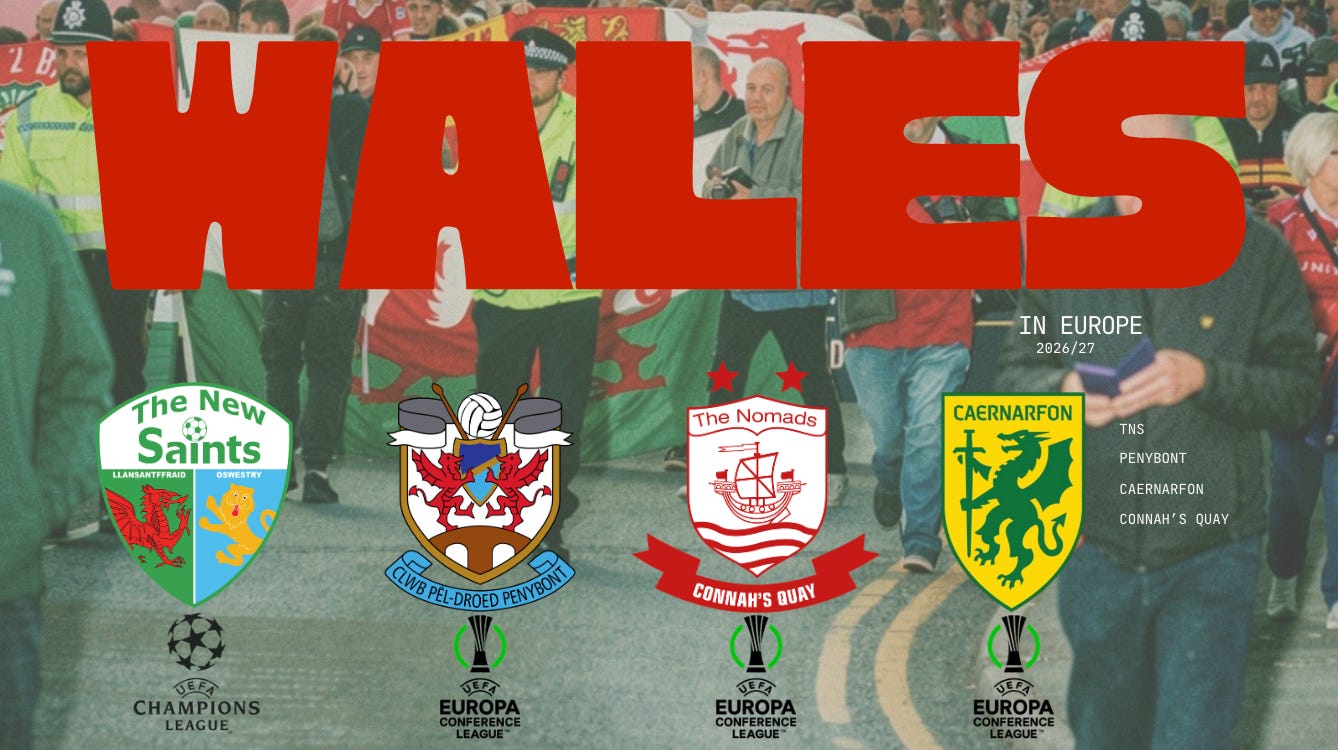
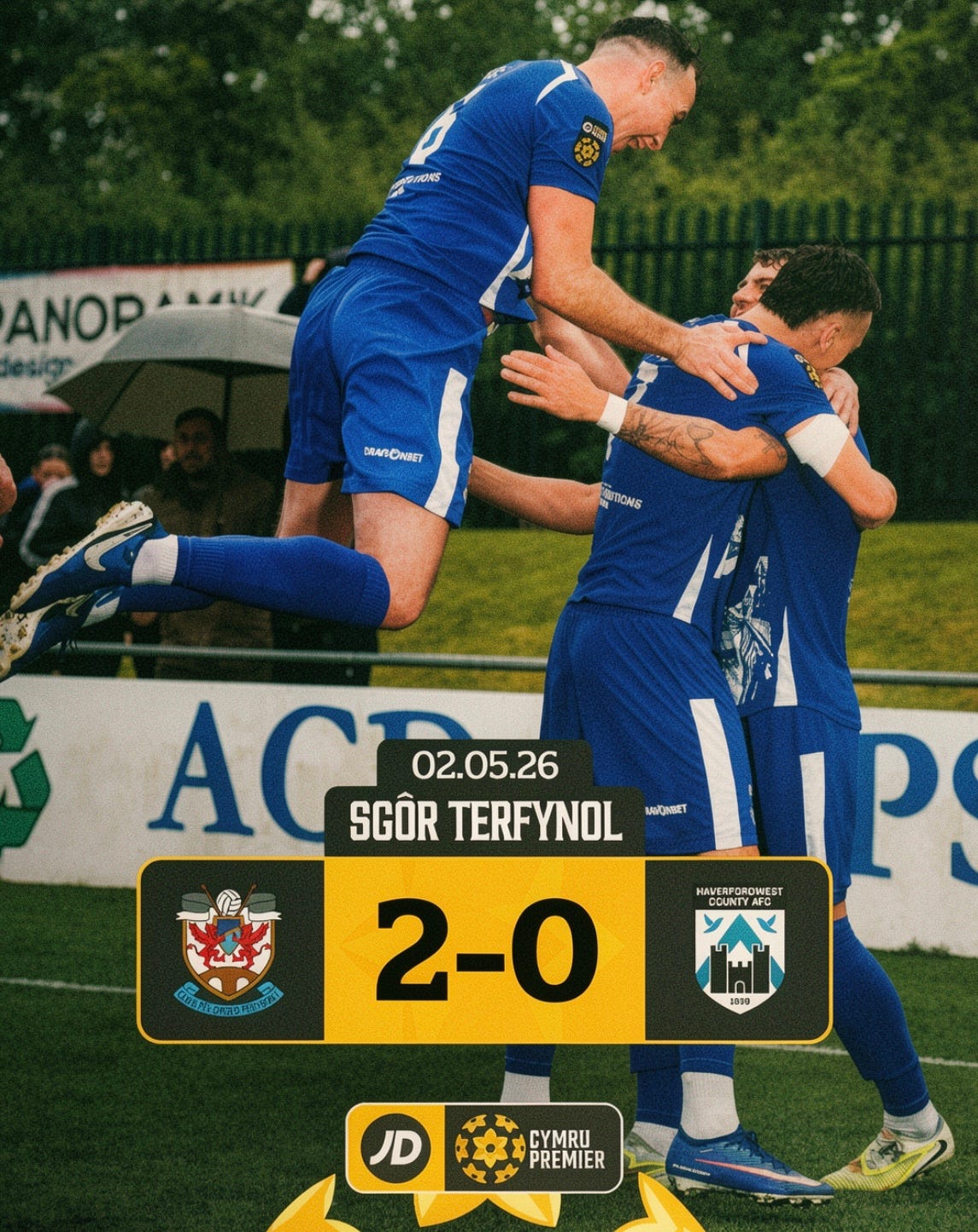
I’m letting myself get excited (maybe a bit early) about next year's Welsh representation on the European stage. Penybont confirmed their spot in Europe after beating Haverfordwest 2-0 on May 2nd, and were the 4th and final club from the Cymru Premier to qualify this season. The ‘Bont’ join TNS, Connah’s Quay Nomads, and Caernarfon in the Champions League and Conference League respectively.
So how’d we get here?
Each club qualified via different routes.
The JD Cymru Premier has four allocated spots in European competition. The New Saints confirmed their place in the UEFA Champions League as winners of the Cymru Premier, while Connah’s Quay Nomads will compete in the UEFA Conference League after securing 2nd place.
The remaining two spots in the UEFA Conference League were claimed by the winner of the JD Welsh Cup (Caernarfon) and the winner of the JD Cymru Premier European Play-Offs (Penybont).
It won't always be 4 Welsh clubs that qualify automatically. The coefficient has to be fed by results, and early exits (as Welsh clubs have experienced often enough) can undo progress in the rankings pretty quick.
The Cymru Premier is currently ranked 54th in the UEFA coefficients, based on the Welsh teams’ performances in European competition over the last 5 years.
That ranking, 54th out of 55 active UEFA associations, is easy to write off as pretty bad if you really want to look at it that way, although it shouldn't be. For the 2026/27 qualifying rounds, Wales will have its full allocation. The league is moving in the right direction, and this European exposure is exactly what sustains that momentum.
The most concrete sign of that growth is simply around the grounds. The league attracted 91,356 supporters across 2025, a new record for a single calendar year in the Welsh top flight. The opening weekend fixture between Colwyn Bay and Connah’s Quay Nomads drew a crowd of 1,516, the highest attendance for a non-playoff fixture since 2011.
Most clubs, however, still maintain the semi-professional structure, with average annual wage expenditure of around €200,000 per club (far below the estimated £1.5 million minimum needed for fully competitive professional operations).
The league's smaller market (for now) and limited broadcasting income mean the financial ceiling is still very low compared to even the lower reaches of the English Football League. BUT, that’s what this new format and focus on European competition looks to address and rectify.
For me, writing from the States, giving proper credit to everyone involved with the Cymru Premier and the FAW, who have overseen these improvements, is important. Though some decisions may have needed more time to marinate, as is often the case with big sporting organizations (like the binning of two domestic cup competitions), this kind of growth still doesn’t happen without people who believed in the league before the numbers gave them a reason to.
I think at the end of the day, we should all take a moment to appreciate what’s happening here and get excited for some big things in the future.
⚔️ 🏴
Take a look at how Caernarfon qualified. ↓
Suggested reading |

If you’ve been following along and enjoy reading Morning Football you can show some support below.
For inquiries contact:
jon.ebert.10@gmail.com